Sunday, June 26, 2016

Programming for Athletic Performance


Chances are you already have a good idea on how to program a successful training program for athletes to perform to their highest ability. For those of you that do not, do not feel stupid or out of touch. Very few people come right into an internship or new job understanding programing 100%. The easiest way to learn is just to simply ask. When it comes to programing it can be extremely in depth, or can be extremely simple.
In my time as a strength coach I have learned there are two types of people coming into an internship. The first type is the reader, the person that has everything they know from what they have read, and are extremely good at the scientific portion of the job. The second are the practical learners. These coaches have learned everything by doing, and experiencing the programs. Both types of coaches are great, but have fallbacks on each side. The scientific coaches may have zero experience in a true training setting, and it is all just theory to them. They need their internship to get the hands on training needed to be a great coach. The practical learners, on the other hand, have done it all. Were either an athlete, or have been volunteering for quite some time and have the hands on experience needed, but may lack the knowledge of why certain training modalities are being used.  Both types of coaches can, and with work, will be great at their jobs, but can feed off of each other and learn a lot.
        When it comes to programming feeding off of both types of coaches is great. When you program you want to know exactly why you are doing what you are doing, but you also want to know how the body react to certain training protocols first hand. As I said earlier you can make programs as simple as possible, or as complicated as possible. I like to keep my thoughts simple with programing. KISS is a great acronym to live by when is comes to programing.
        There are several types of programing out there. From a linear program, non-linear undulating periodization, running a conjugate system, the tier system, and the list can go on and on. The thing to remember is to asses the needs of your program, and find the best program for your team. Speak with your sport coaches, and determine what style of play they plan on using. From this you can then program for their needs.
        Find a program you feel comfortable with, research it more, and become proficient at using it. Just remember that your job is to reduce injuries, and get your athletes to perform at the highest level possible. Research what programs the other coaches you work with run, and find a way to improve on them. There is no set way on how to run any program, just always ensure that you trust that is will work, and the reasoning is based in science and experience.



Squats Are Better Than Leg Extension on the ACL


Most clients at fitness clubs and athletic performance centers prefer to perform the leg extension over squatting to help them develop the quadriceps muscles. They are both common exercises but leg extensions do have their drawbacks.
The ACL is the anterior cruciate ligament. It is one of four main ligaments that attach the tibia-fibula to the femur. The ACL is torn by tibia translation.
Squats are a closed kinetic chain exercise, which is defined as exercises where the foot is in direct contact with a solid surface, and are used by sports performance coaches for many reasons. They are a multiple joint exercise. The primary joints that a squat is involved with are hip, knee, and ankle. The gluteus maximus (butt muscles) is the main muscle used at the hip. The primary muscle used at the knee are the quadriceps muscles. The ankle’s primary muscle is the gastrocnemius (calf). Squats are a common way to measure for lower body strength and involve most muscles and joints in the leg.
Leg extensions are open kinetic chain exercises, which is defined as exercises where the foot is not in contact with a solid surface. They are also single joint exercises which means that only one joint and one muscle are working at a time. The leg extensions isolate the quadriceps, the primary movers. They allow the user to fix bilateral deficits, that may lead to injuries if not addressed. Leg extensions are easy to use machines that require little coaching or technique. When using leg extension, it may feel like it is a safe exercise, but not always for the ACL. There is a lot of tibia translation in the knee, and all of the force applied during a leg extension is on the knee. Hamstrings are not activated during a leg extension, which then the quadriceps are the only muscle that applies force on the ACL.
Leg extensions may look and feel safer but the risk of using one may be high. Squats are safer on the knee than leg extension, because the tibia does translate as much. Squats allow forces to be exerted into another object, unlike leg extension which exerts force on the joints. Research suggests that squats are safer than leg extensions.


Sunday, June 12, 2016

What to Expect from a Strength & Conditioning Internship Pt. III

In my last blog, I continued my three-part series on what to expect as you prepare for your strength & conditioning internship. This blog will wrap up the series and hopefully give great insight into what to expect as you are beginning your strength and conditioning career.
good questions.jpeg
7.      Take every opportunity to learn. As stated in previous blogs, you are surrounded by great resources to learn every day. Your mentor, assistant strength coaches, Graduate Assistants, the other interns, and even the athletes will provide great chances for personal growth. Free time in the gym doesn’t mean it is time to check your Facebook or Twitter. It is time to ask GOOD QUESTIONS, learn a new skill, teach a skill, research programs, read a training article, or practice training methods. You are only given 24 hours, 1,440 minutes, and 86,400 seconds in a day. Why not utilize all of it?
        This is the time that you become a better coach. Then you go and apply all your new knowledge to your coaching in the next session. This is an extremely competitive field, with an abundance of young coaches trying to get the same jobs you will be applying for. It is the little difference you decide to make in your free time that could just put you ahead of them.
8.      Be prepared to be short on cash. There is a limited amount of paid internships available, and the chances of getting them right away are very small. If you are lucky enough to get a paid internship, chances are that you will get a limited amount of hour that you can be paid for each week. It makes it very hard to live off of the small amount getting paid. Going into your internship knowing that money will be tight can be the most helpful thing I can do for you. If you are this far in you career in strength and conditioning, you know that you are not in it for the money. This is not a glorious field. It is a field of service to others. You do it for the love of the athletes and the satisfaction of providing the best playing career possible for them.
cash.png         With that being said you have to make it a priority to be smart with your money, or be willing to work other jobs as you intern. There are plenty of opportunities out there to make some extra cash.
·      Find a personal training job or teach group exercise.
o   Chances are during your studies you have acquired some sort of certification. Campus rec centers are always looking for great trainers to work for them. I know it is not what you want to do forever, but it can be fun and provide a little extra income.
·      Find odd jobs around town
o   It is likely that many donors pass through your athletic department daily. Often times they will have, or know someone, that has some work for you. Be willing to get dirty with these jobs, but they can provide great additional income as well as possible references.
·      Referee high school sporting events
o   Local officiating chapters are always looking for new help. This is a year round way of being around what you love, and also having fun. All you have to do is look up your local chapter. Usually you will have to pass a test, and attend an  introductory meeting. After this your evenings will be full of games, and events for extra income. These events are almost always at night, as to not interfere with your internship.
Hopefully my blogs have helped give an idea as an insight into your internship you are preparing to begin. Go attack this, and become the best coach you possibly can.
Remember this is the first step of many in a long and successful career, make the most out of this opportunity. Always remember to
1.     Accept your shortcomings
2.     Step outside of your comfort zone
3.     Let go of the past
4.     Listen to your mentors
5.     Take pride in the little things
6.     Read every day
7.     Learn something new every day
8.     Be prepared for some hard times

What to Expect from a Strength & Conditioning internship Pt. II

        Last blog I covered my first three points on what to expect as a strength and conditioning intern. This blog will cover my next 3 points to help you prepare for your internship, and to help you become the best strength coach possible. Now I know by all means I still have much to learn, but this is all advice I believe every new intern needs.
Dont be upset.jpeg
4.      This is possibly the most important point I can make. LISTEN TO YOUR MENTOR! Any of your full time staff you are learning under did not get to where they are by happenstance. They worked their butt off just like you are right now. They have put in the hours of grunt work, cleaning barbells, wiping off the floor from chalk, changing weights for athletes and then standing there as an observer. Listen to what they tell the athletes, how they communicate with you as well as administration. They have more to offer to you than you could possibly imagine. If you are lucky enough to get an internship like the one I had, the mentor will be your best friend. Often times all you have to do is ask and they will help you as much as they possibly can. If they are busy at that moment they will get back to you. Their job is not only to develop athletes, but develop you as a better coach.        
When I said you don’t know anything, just spend 5 minutes talking shop with your mentor to realize how much you still have to learn. A quick meeting will open your eyes to how much can be done with athletes, and all the little subtleties that go into being a great S&C coach. I was lucky with my mentor to get someone who has been coaching at a very high level for a very long time. Try to find a mentor like that and soak up everything you can from them. This includes all the good, and the bad.
5.      With the grunt work I spoke of earlier, take pride in every single job you are given. If you are told to be a spotter, be the best spotter in the weight room. If you are asked to clean the weight room from floor to ceiling, you make sure that room is spotless. As you do this your mentor will see your work, and slowly give you more responsibilities. The more responsibilities you have, no matter how low you think they are, the more trust you have earned. If your mentor can not trust you with these little task, they will never be able to trust you with a team of your own, or running a workout. Take these little task head on with pride, and make them your own. These are character building, and also a good experience if you ever want to run your own program.
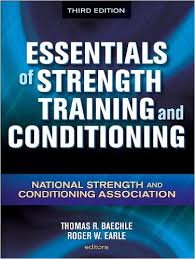
Essentials.jpeg6.      READ EVERY SINGLE DAY! There are several ways to become a better coach, but reading is one of the best ways to enhance your skills as a coach. There are countless books, articles, blogs, and journals about strength coaching out there. All you have to do is look. When reading it does not have to be specifically about training, or coaching styles. It can be as simple as a business book on how to deal with people, or a self help book to improve yourself. The point is to read something that will make you better each and every day. Remember “Leaders are readers.”
        There are many great resources out there for reading
o   Elitefts.com
o   T-nation.com
o   Essentials of Strength Training & Conditioning (Textbook)
o   Strength & Conditioning journal
Are just a few to start with. Start with these and follow leads to find even more text.

Elite FTS.jpeg
Next blog will wrap up my three part series on preparing for your strength and conditioning internship.

What to Expect from a Strength & Conditioning internship Pt I.

So you are getting ready to start your internship as a strength and conditioning coach?  No matter where you are in your coaching career any new internship can and will have many challenges. After several years as a student coach of football and as an intern in strength and conditioning I have learned a few things.  Over the next few blogs I will highlight some things to look forward to, and be prepared for, as you begin your Strength and Conditioning internship.
Keep calm superintern.png1. Accept that you do not know everything. As a matter of fact, if you are just starting out, you know relatively little compared to what you will know in a year’s time. With that in mind, embrace this great opportunity as exactly what it is. As with any internship, this is a learning opportunity to further your knowledge in strength and conditioning. Everywhere you go, there will be different coaching styles, cues used, and athletes to be dealt with. Use these differences to learn and develop your coaching style.1 Take every opportunity to pick another coach’s brain to see what they can teach you. Other interns are often your best allies to improve yourself. They are in the same boat as you in trying to better themselves with this internship. They will have things that you can learn from, and you will have things that you can teach them.
       
2.      Step outside of what you know. Every coach has their niche, and it is in your best interest to find yours early on in your career and refine it. With that being said, it is also in your best interest to soak up every bit of information you can while you are doing your internship. You may be a football-minded strength coach, and eventually be the best football strength coach ever known and develop programs everyone wants to implement, but at this time you are just an intern. You must refine other skills to become even better at what you are best at. Learn what the basketball teams are doing, ask why certain methods are being used with baseball and not with softball. Go into every day with the purpose of learning something new.2 It is amazing how much you can learn just by observing and asking.
Coach.jpeg3.      It’s time to let go of your playing career. No one cares that you were an all-conference athlete your junior and senior year. Those years are behind you. Yes, they may have molded you and turned you into the coach you are now, but if you feel the need to bring it up every day, or week, the athletes will get tired of hearing about how “great” you were.3 All that matters now is your ability to coach and improve the athletes you work with. All your years of playing and being a great athlete don’t mean anything if you can not take the abilities you developed as an athlete and use them in your coaching. Once athletes see you as a coach, and not just another athlete past their playing career, the amount respect you will gain from them will be astonishing. They understand that you went through the same things they are going through right now, and will trust you if you tell them push just a little harder, complete one more rep, or add five more pounds. Athletes understand athletes, but they understand coaches first.

Next blog will continue with three more points about how to get the most out of your internship. I hope this has helped you prepare for your next step to being the best strength coach possible.